

Discover the gripping history of the Anglo-Zulu War of 1879, an emblematic conflict that pitted the British Empire against the Zulu Kingdom in South Africa, marking a decisive moment in African resistance struggles against colonialism.
In 1879, the African continent was the stage for a historic confrontation between the British Empire, driven by colonial expansion, and the proud Zulu Kingdom, determined to defend its independence. The Anglo-Zulu War, far more than a simple military conflict, symbolizes the fierce resistance and courage of a people in the face of European imperial ambitions. This article delves into the heart of this turbulent period, exploring the deep-rooted causes, the key moments, and the lasting legacy of this war that forever marked the history of South Africa and its peoples.
At the beginning: the roots of the anglo-zulu war
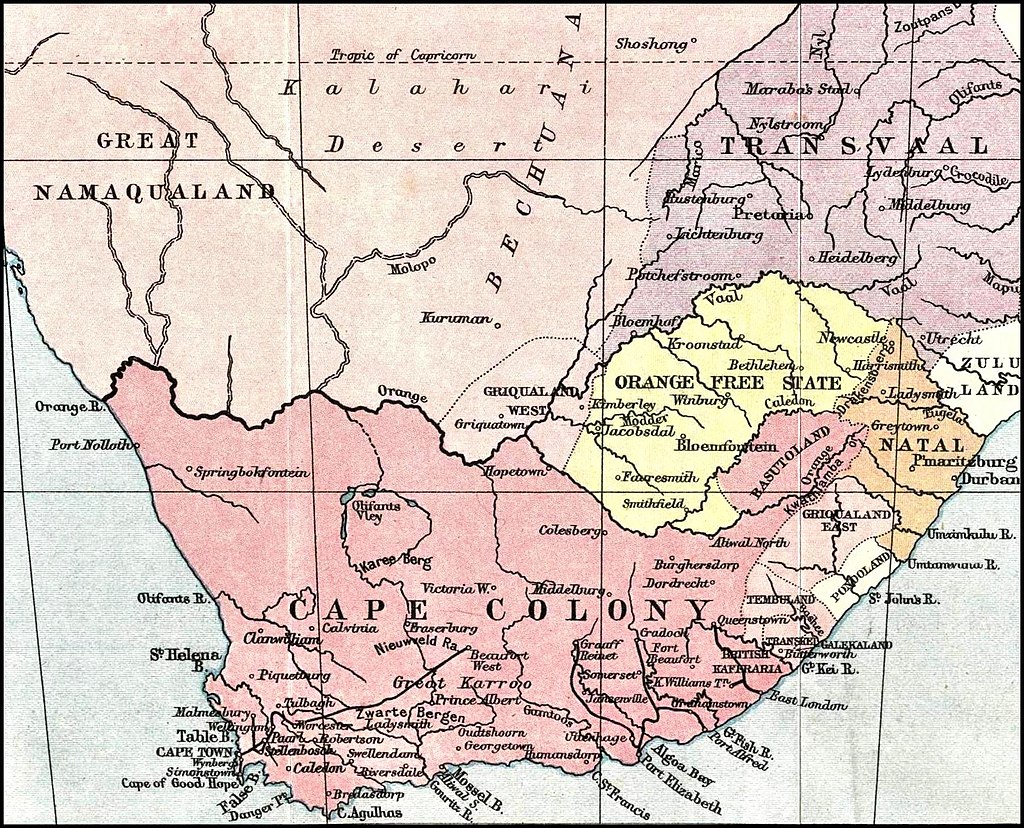
The Anglo-Zulu War, which took place from January 11 to July 4, 1879, in South Africa, was a major confrontation between the British Empire and KwaZulu¹. The origins of this conflict lie in British ambitions over Zulu territory. Indeed, the British viewed the Zulu population as a potential source of labor for South Africa’s diamond mines. Moreover, they harbored plans to create a South African federation that would include the Zulu Kingdom, with the aim of unifying the region under their control. This ambition was also accompanied by a desire to settle the territorial claims of the Boers², these settlers of Dutch origin, over lands occupied by the Zulus.
These British expansionist aims were bound to collide with the sovereignty and independence of the Zulu Kingdom, thus triggering one of the most emblematic confrontations in the colonial history of South Africa.
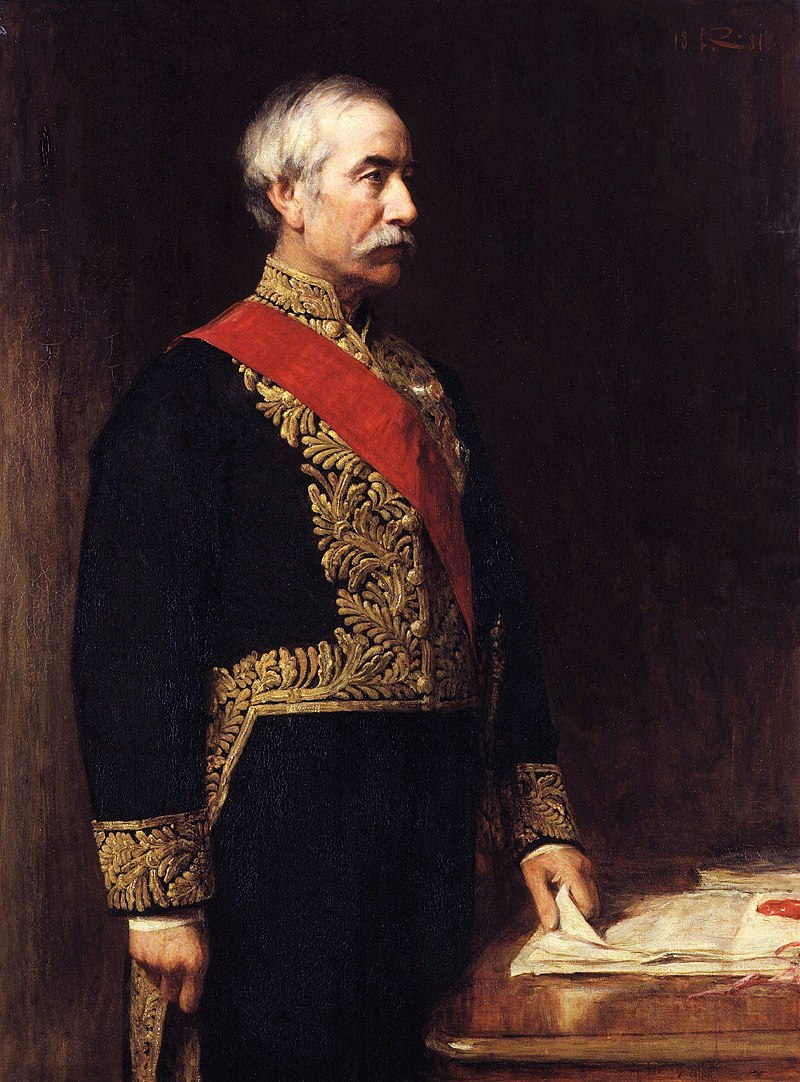
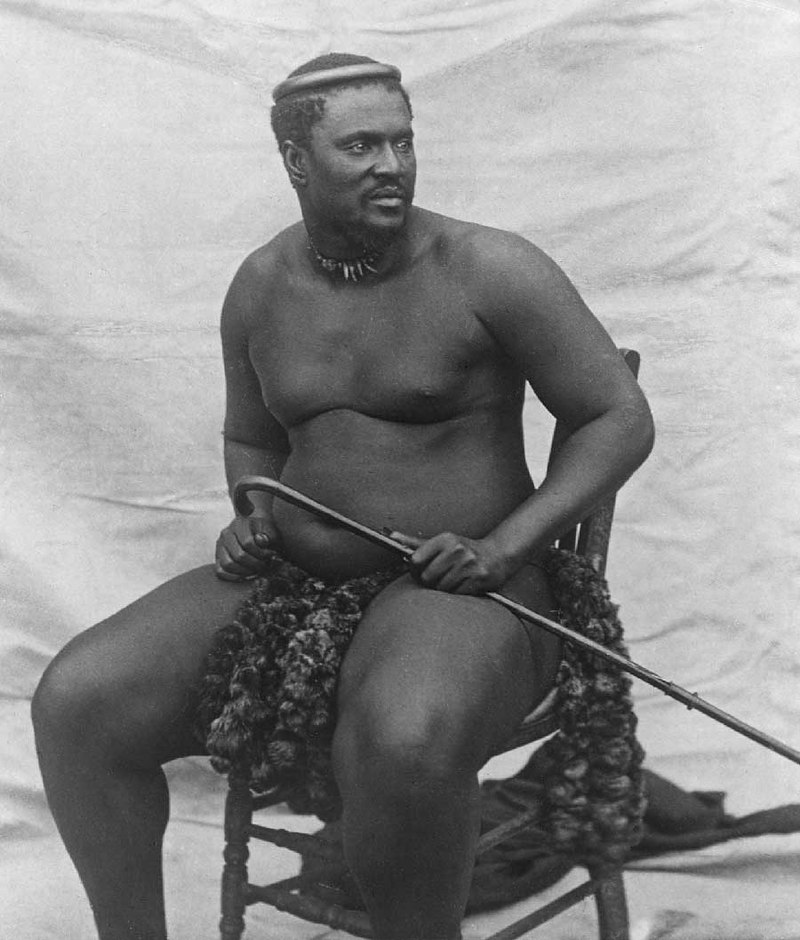
The king of the Zulu Kingdom, Cetshwayo³, categorically refused to submit to British control. Instead, he mobilized an impressive army of nearly 60,000 men. In December 1878, Sir Bartle Frere⁴, the British High Commissioner in South Africa, issued an ultimatum to Cetshwayo. He demanded that the Zulus dismantle their military system within 30 days and pay reparations for alleged offenses.
Legendary battles
When the ultimatum was rejected, in January 1879, British troops under the command of Lord Chelmsford advanced toward KwaZulu. On January 12, 1879, a first skirmish took place at Sihayo’s Kraal⁵. British forces, led by Lord Chelmsford, clashed with the Zulus commanded by Mkumbikazulu kaSihayo⁶, who was killed in combat, resulting in a British victory.
On January 22, British and Zulu forces met in what would go down in history as the Battle of Isandlwana. The British army, numbering 1,800 men, faced a Zulu force of some 20,000 warriors, led by Ntshingwayo Khoza⁷. Despite their military superiority in terms of equipment, the British suffered a crushing defeat at the hands of the Zulus, a setback so humiliating that it was compared by some military experts to General George Armstrong Custer’s defeat at the Battle of Little Big Horn, in the Montana Territory of the United States, in 1876.
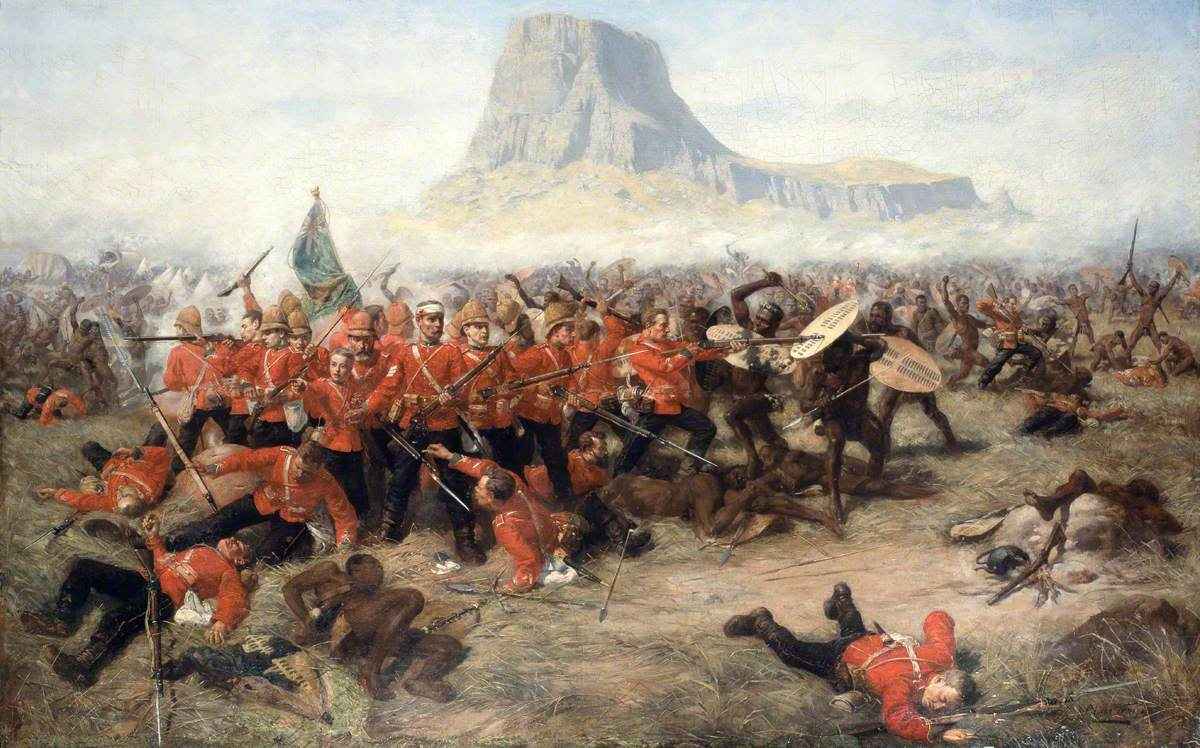
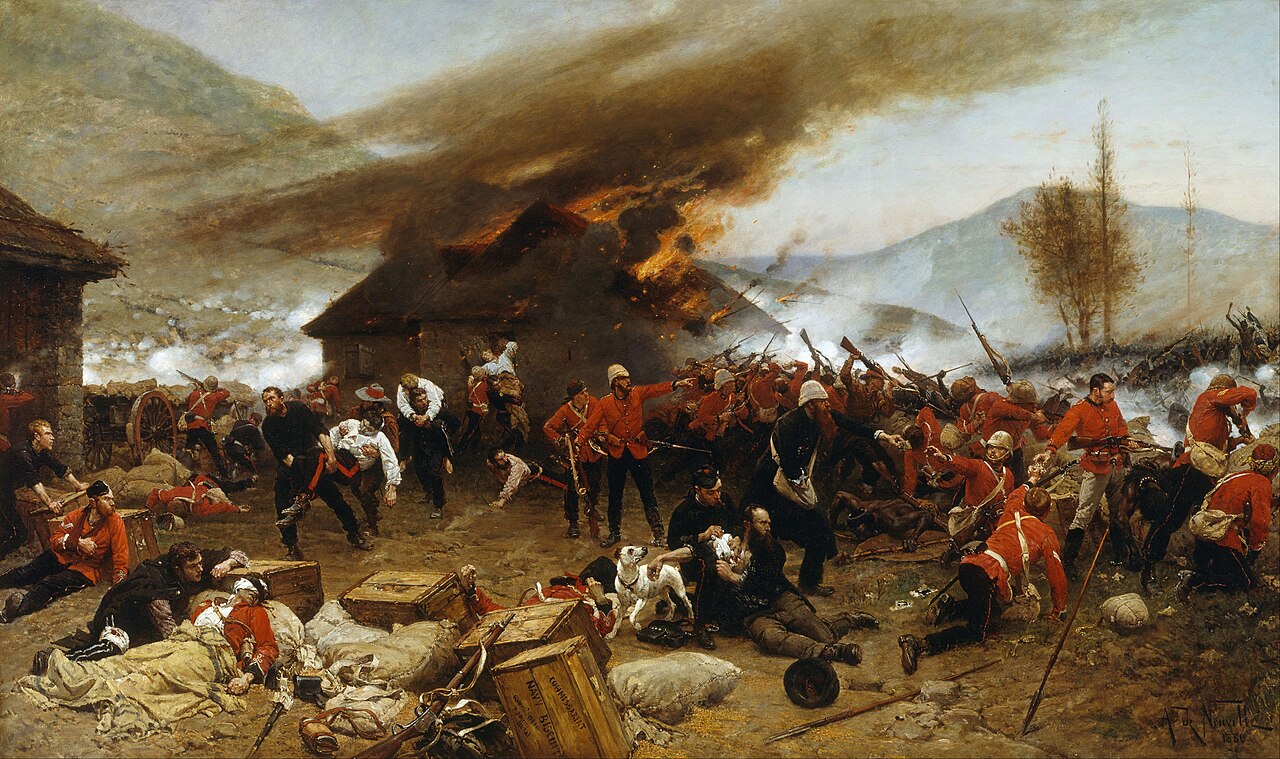
Later that same day, Dabulamanzi kaMpande, brother of Cetshwayo, led Zulu troops at Rorke’s Drift, in the province of Natal, against British forces commanded by John Chard and Gonville Bromhead. This conflict, later named the Battle of Rorke’s Drift, saw 140 regular soldiers of the British Army repel 4,000 Zulu warriors.
The next major engagement of the war, the Battle of Intombe, took place on March 12, 1879. The Zulu prince Mbilini waMswati and British commander David Moriarty led their respective forces into battle. British commander Moriarty was killed, leading to a Zulu victory.
Other clashes also marked the Anglo-Zulu War, such as the Battle of Hlobane, the Battle of Kambula, the Battle of Gingindlovu, the Siege of Eshowe, the skirmish at Zungeni Mountain, and finally the Battle of Ulundi. The latter, which occurred on July 4, 1879, was the last major battle of the Anglo-Zulu War. It ended in a British victory, with Lord Chelmsford defeating Cetshwayo and his army, thus marking the end of the conflict.
The repercussions of the conflict
After the Battle of Ulundi, the Zulu army dispersed. Cetshwayo was forced to flee, becoming a fugitive until his capture on August 28, 1879. He was then sent to the Cape, in South Africa. Zululand, for its part, was incorporated into the British Empire.
A cinematic legacy
In 1964, the Anglo-Zulu War was brought to the screen for the first time, starring British actors Stanley Baker and Jack Hawkins. This film retraced the events of the Battle of Rorke’s Drift. In 1979, the film Zulu Dawn was released, depicting the events of the Battle of Isandlwana.
A lesson of history
The Anglo-Zulu War of 1879 remains etched in collective memory as a powerful symbol of resistance and African pride. Despite the tragic outcome for the Zulu Kingdom, this conflict highlighted the bravery and determination of a people fighting for their land and sovereignty. Today, the history of this war reminds us of the importance of preserving the memory of past struggles, while inspiring us to continue the fight for justice and equality. By revisiting this crucial chapter of African history, we pay tribute to those who fought valiantly and reaffirm our commitment to a future in which every nation can prosper freely and proudly.
Notes and references
The information provided in this article is based on several reliable sources recognized for their expertise on the subject of the Anglo-Zulu War. Among these sources are:
- Encyclopædia Britannica: A detailed article on the Anglo-Zulu War, available on Britannica, which offers a comprehensive historical overview and analyses of the causes, course, and consequences of the conflict.
- South African History Online: A valuable resource offering an article on the Anglo-Zulu Wars from 1879 to 1896, accessible on SAHO. This source highlights the different phases of the conflict and its impact on South African history.
- Chris Peers: The book Rorke’s Drift and Isandlwana: 22nd January 1879: Minute by Minute (Newbury, Berkshire, United Kingdom: Greenhill Books, 2021) by Chris Peers provides a gripping and detailed narrative of the events of the Anglo-Zulu War, focusing particularly on the emblematic battles of Rorke’s Drift and Isandlwana. This work sheds precise light on military strategies, key figures, and decisive moments of the conflict.
¹ KwaZulu: A historical region within the present-day province of KwaZulu-Natal in South Africa. KwaZulu was the heart of the Zulu Kingdom during and before the Anglo-Zulu War. This region is significant for its central role in Zulu history and culture.
² Boers: Refers to the descendants of the first European settlers, mainly Dutch, who settled at the southern tip of Africa in the 17th century. The Boers later founded the republics of the Transvaal and the Orange Free State and were involved in the Boer Wars against the British Empire.
³ Cetshwayo kaMpande (c. 1826 – 1884): King of the Zulu nation from 1873 until his defeat during the Anglo-Zulu War in 1879. His resistance against British attempts at subjugation is a key element of Zulu history.
⁴ Sir Henry Bartle Edward Frere (1815 – 1884): British High Commissioner for South Africa from 1877 to 1880, often criticized for having exacerbated the tensions that led to the Anglo-Zulu War, notably by issuing an unrealistic ultimatum to King Cetshwayo.
⁵ Sihayo’s Kraal: A fortified village belonging to Sihayo kaXongo, a Zulu chief whose actions and those of his family contributed to the preliminary tensions leading to the Anglo-Zulu War. The kraal was one of the first sites of confrontation in the conflict.
⁶ Mkumbikazulu kaSihayo: Son of Sihayo, Mkumbikazulu was involved in the incident that served as a casus belli for the British. His role in the alleged abduction of a woman who had fled to escape an arranged marriage was one of the pretexts used by the British to justify the ultimatum to Cetshwayo.
⁷ Ntshingwayo Khoza: Commander-in-chief of the Zulu army during the decisive victory against British forces at the Battle of Isandlwana in 1879. Ntshingwayo played a crucial role in the organization and military strategy that led to one of the greatest defeats in the history of the British Army.


