

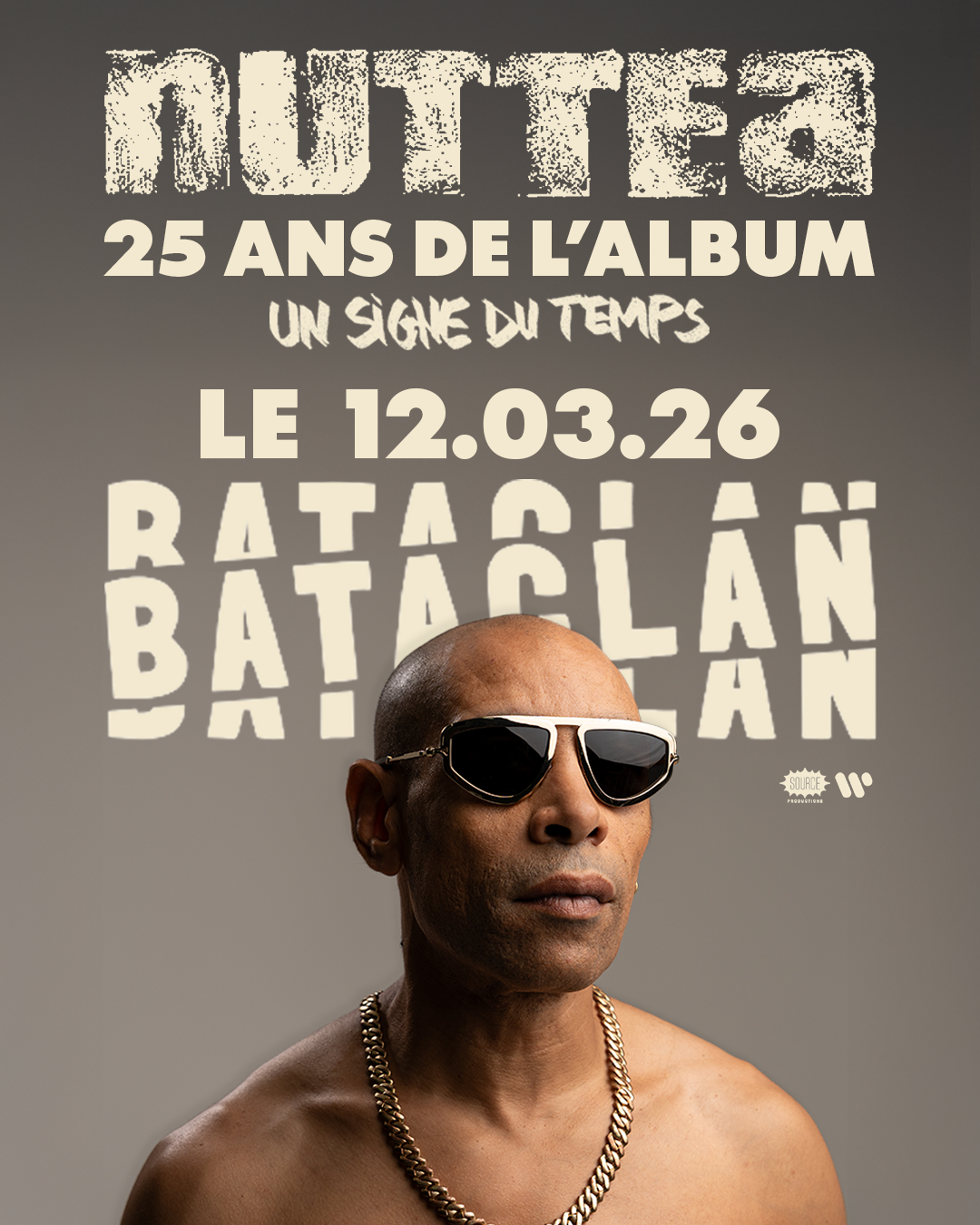
On March 12, 2026, Nuttea will take the stage at the Bataclan to celebrate the 25th anniversary of the album Un signe du temps. More than just an anniversary concert, the event is shaping up to be a moment of musical remembrance for an entire generation that witnessed, in the late 1990s, the rise of a French-language reggae capable of conversing with rap, ragga, and French popular culture.
The return of a major voice in French reggae at the Bataclan
Born on December 26, 1968, under the name Olivier Lara, Nuttea belongs to that generation of artists who helped anchor reggae within the French musical landscape. Having spent part of his childhood in Guadeloupe before returning to Paris, he grew up in a musical environment shaped by sound systems and Caribbean cultures.
In the late 1980s, he cut his teeth within the High Fight International sound system, alongside figures such as Tonton David and Don Lickshot. At the time, this Paris reggae scene was still underground, serving as the laboratory for a generation that would gradually impose ragga and dancehall in French.
The general public truly discovered Nuttea in 1997 with the track Agitateur and his French-language reinterpretation of Natural Mystic by Bob Marley, whose music video was broadcast on M6. This period marked a turning point for urban music in France: rap was becoming commercially dominant, while French-language reggae was finding a new audience.
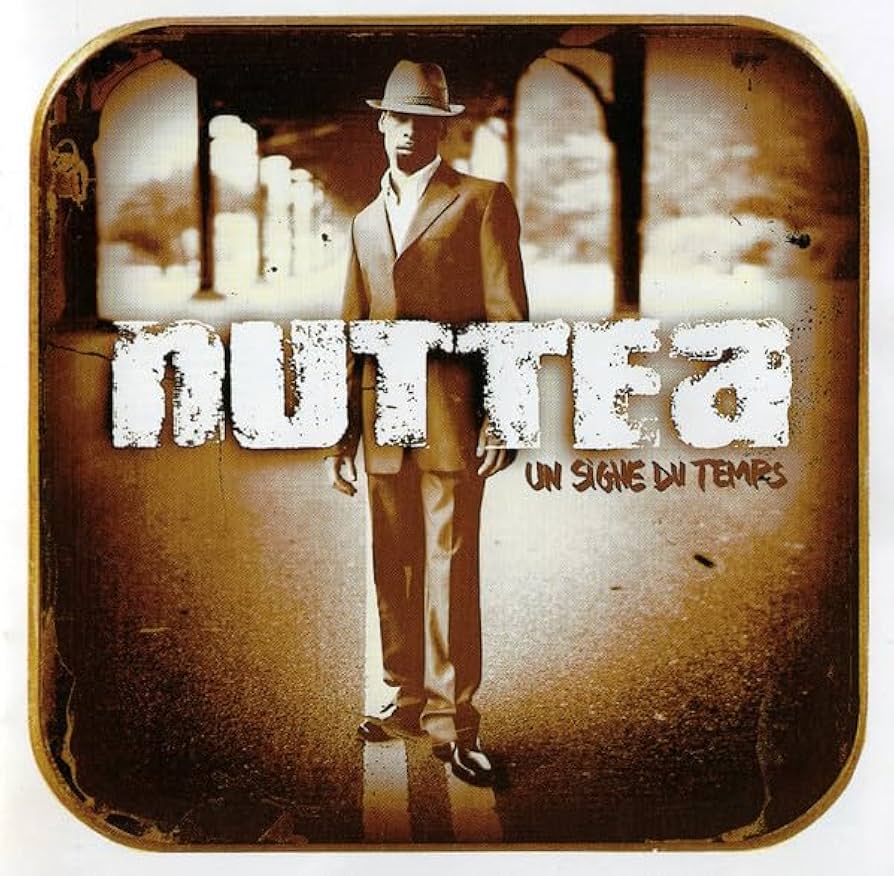
But it was in 2000 that Nuttea achieved nationwide visibility with the album Un signe du temps. Driven in particular by the hit Elle te rend dingue, the record sold nearly 700,000 copies — a remarkable figure for a French-language reggae album.
The album emerged during a period when the boundaries between reggae and hip-hop were becoming increasingly porous. Nuttea notably collaborated with the Marseille group IAM, appearing on the track Un cri court dans la nuit from the album L’École du micro d’argent.
This circulation between musical scenes helped broaden the audience for French-language reggae, embedding it within the wider dynamic of urban cultures.
In the early 2000s, Nuttea multiplied collaborations and appearances. He notably took part in the soundtrack for the film Taxi 2 alongside Disiz, Faf Larage, and Jalane within the collective One Shot. He also worked with the British group UB40 on the track Cover Up.
Like many artists from the reggae-ragga wave of the 1990s, his career later went through quieter periods. The album Urban Voodoo in 2004 did not achieve the same commercial success, and the artist continued his journey more discreetly, while remaining active on stage.
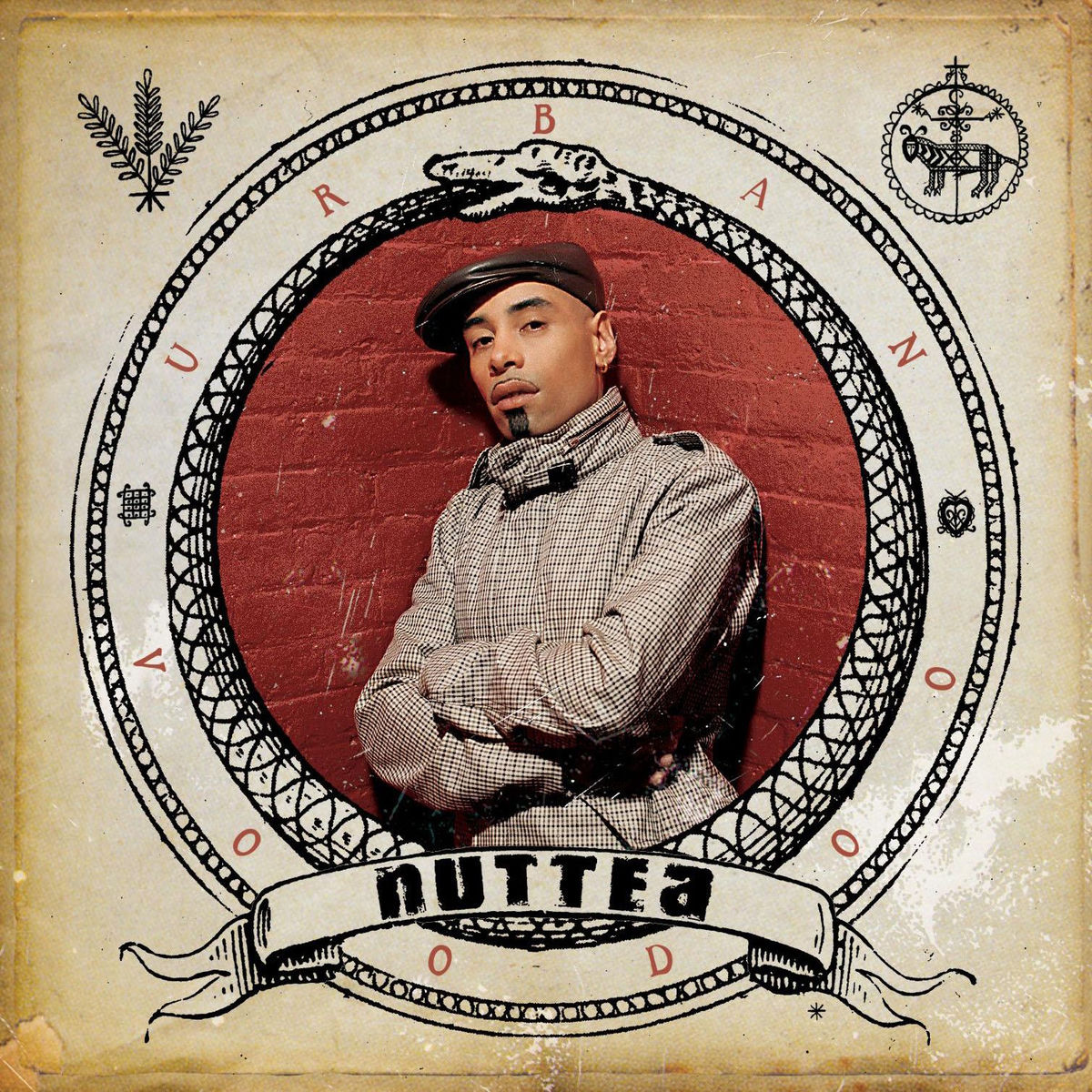
He nevertheless continued producing new projects, notably Mister Reggae Music in 2013, followed by Tribulations in 2024.


The March 12, 2026 concert at the Bataclan therefore marks a symbolic moment. Twenty-five years after the release of Un signe du temps, Nuttea returns to perform the songs that shaped both his career and that of an entire generation of listeners.
In a musical landscape where younger generations are rediscovering the roots of French-language reggae, this celebration takes on a particular significance. It serves as a reminder that before the era of streaming and algorithms, a local reggae scene had managed to establish itself on the airwaves and in the charts.
More than just the anniversary of a record, this concert is shaping up to be a reaffirmation: that of a French reggae which, for more than three decades, has continued to bridge Caribbean heritage, urban culture, and French-language songwriting.
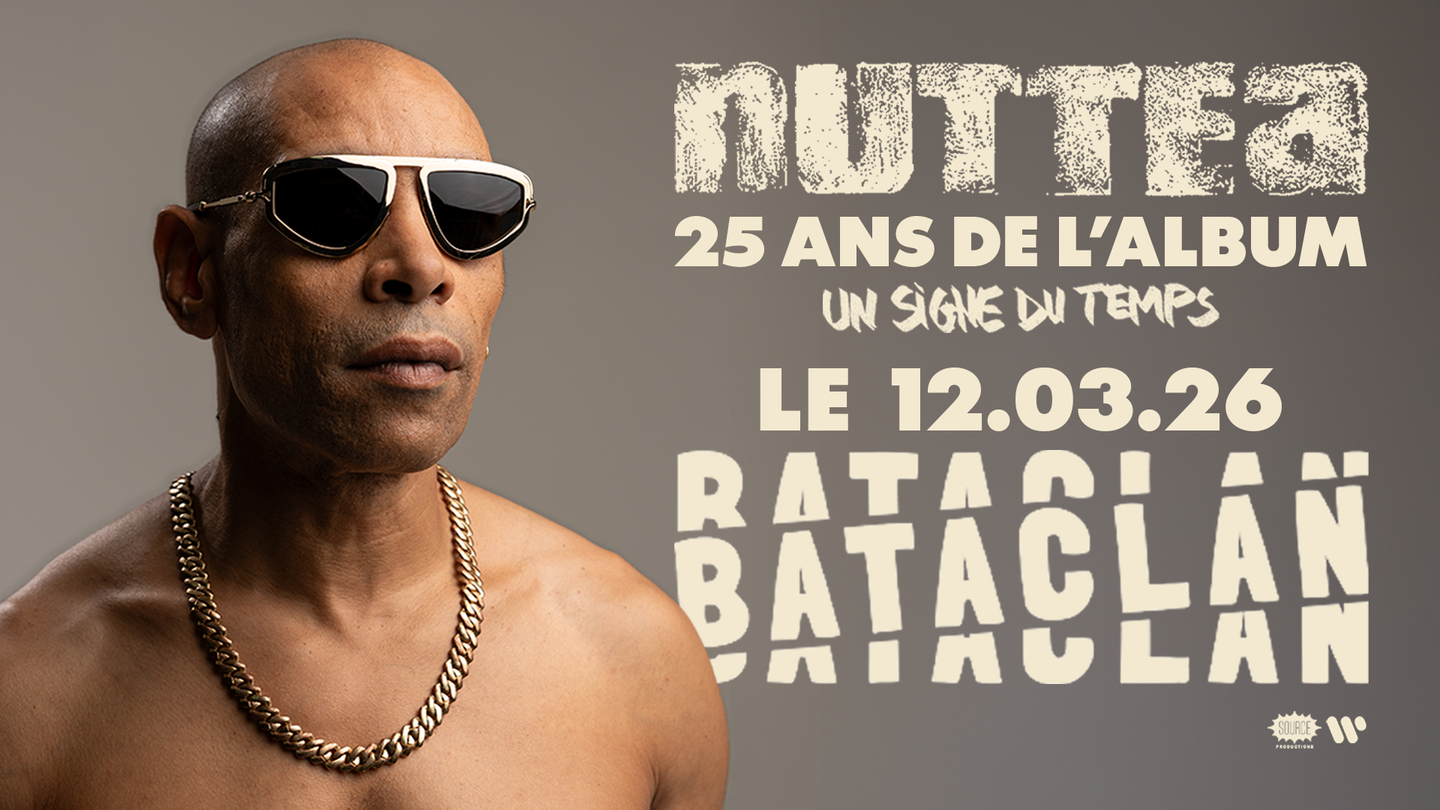
On March 12, at the Bataclan, Nuttea will remind audiences that some voices transcend time. And that songs, sometimes, become signs of their own era.

