

Steve Rogers embodies America’s ideal face: courage, sacrifice, freedom, the flag. Isaiah Bradley reveals its buried side: Black soldiers used as test subjects, erased memory, prison, medical experimentation, delayed recognition. Created in Truth: Red, White & Black by Robert Morales, Kyle Baker, and under the editorial impulse of Axel Alonso, Isaiah Bradley transforms Captain America into a political question. In both the comics and the MCU, he forces the star-spangled shield to carry everything America long refused to confront.
Isaiah Bradley, the Black fracture in the Captain America myth
Captain America is one of the most powerful myths in American popular culture. A frail young man, Steve Rogers, receives the super-soldier serum, becomes an exceptional fighter, and carries within himself the moral promise of the United States: courage, loyalty, defense of the weak, and the fight against fascism. His shield summarizes a national ideal. It shines because it simplifies America.
Isaiah Bradley brings shadow into that symbol.
With him, Marvel asks a brutal question: what happens when the American dream needs Black bodies to manufacture itself? What becomes of the patriotic ideal when the state that celebrates a white hero secretly sacrifices Black soldiers? What is a shield worth when some men carried it without any right to recognition, memory, or justice?
Isaiah Bradley is not simply a Black version of Steve Rogers. He is the political fracture inside the Captain America myth. Steve Rogers carries America as it likes to tell its own story. Isaiah Bradley carries America as it treated many of its Black soldiers.
That tension is what gives the character his strength. Isaiah Bradley does not erase Steve Rogers. He forces him to become more complex. Behind the official hero, he places a clandestine history made of experimentation, segregation, prison, silence, and national debt.
The birth of Isaiah Bradley in Truth: Red, White & Black
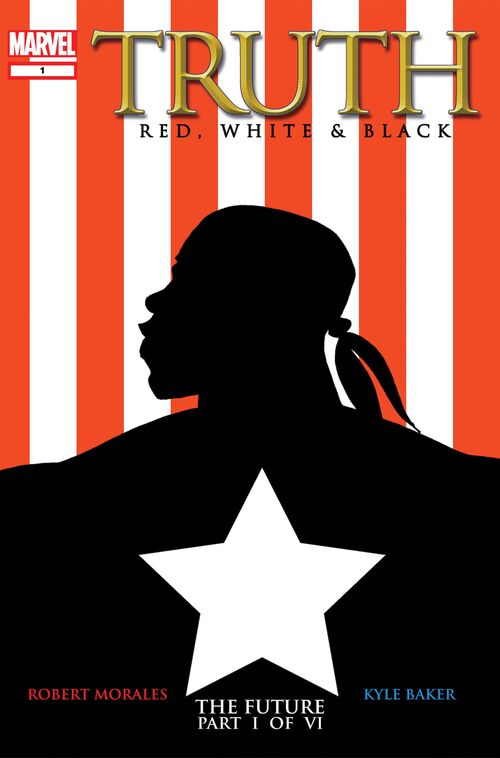
Isaiah Bradley first appears in Truth: Red, White & Black, a seven-issue Marvel miniseries published in the early 2000s, written by Robert Morales and illustrated by Kyle Baker. Marvel now presents the character as a major figure tied to the secret history of the super-soldier program and the first Black Captain America.
The editorial genesis matters just as much as the story itself. The concept emerged within Marvel through Axel Alonso, Robert Morales, and Kyle Baker. Axel Alonso was struck by the political power of a Black man wrapped in red, white, and blue, and immediately thought of the Tuskegee Syphilis Study. Morales then developed the narrative, while Baker gave it its graphic force.
The project was explosive because it touched an icon. Captain America is not an ordinary superhero. He is a national allegory. Confronting him with a story of racial experimentation amounts to saying that heroic America also rests on concealed violence.
At first, Truth: Red, White & Black generated backlash. Part of the audience believed Marvel wanted to replace Steve Rogers or brutally rewrite continuity. Kyle Baker later explained that the series did not erase Steve Rogers: it revealed a parallel story, subsequent or peripheral depending on continuity logic, centered on a program attempting to recreate the serum. Captain America already existed, and the series was never intended to destroy Steve Rogers’ chronology.
The strength of the narrative comes precisely from that point. It does not replace the official myth. It shows what that myth leaves buried underground.
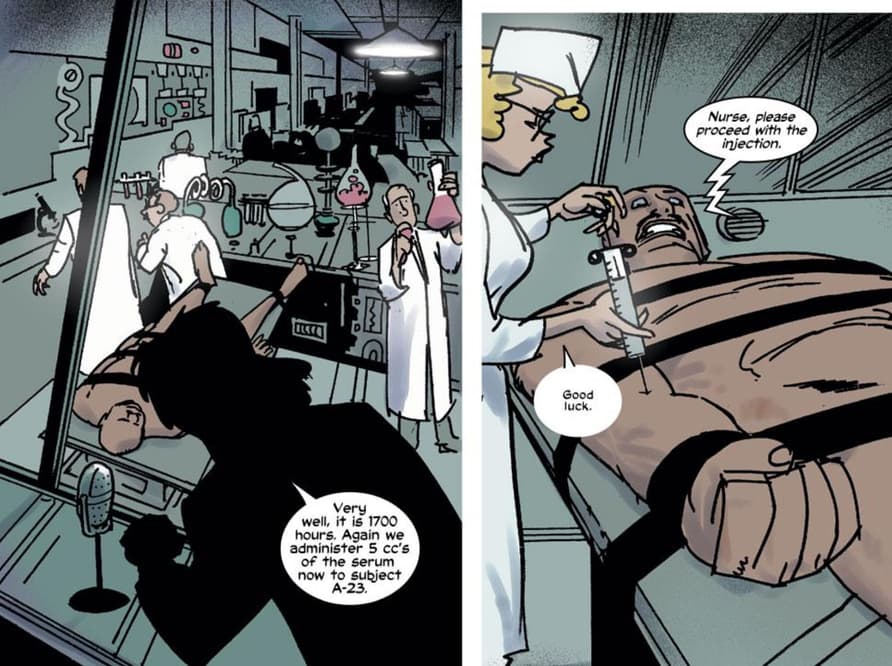
Truth: Red, White & Black works because it dialogues with real historical facts. The first is the Tuskegee study. Between 1932 and 1972, the American Public Health Service monitored Black men with syphilis without obtaining informed consent and without offering them proper treatment once it became available. The study initially involved 600 Black men, including 399 with syphilis and 201 without, and informed consent was never obtained.
The affair became one of the major symbols of American medical racism: the Black body treated as observational material, Black suffering transformed into data, and trust in the state shattered by institutional violence.
The second context is the segregated American military. During World War II, African American soldiers fought for a democracy that maintained them within second-class citizenship. The “Double V” campaign expressed that contradiction: victory against fascism abroad, victory against racism at home. African Americans tied their wartime effort to demands for social, political, and economic gains in the United States.
Marvel’s fiction condenses these two realities. It takes the super-soldier myth, the history of medical racism, military segregation, and patriotic hypocrisy, then merges them into a comic-book narrative. The result is simple and violent: before creating a recognized hero, the state experiments in secret on Black soldiers.
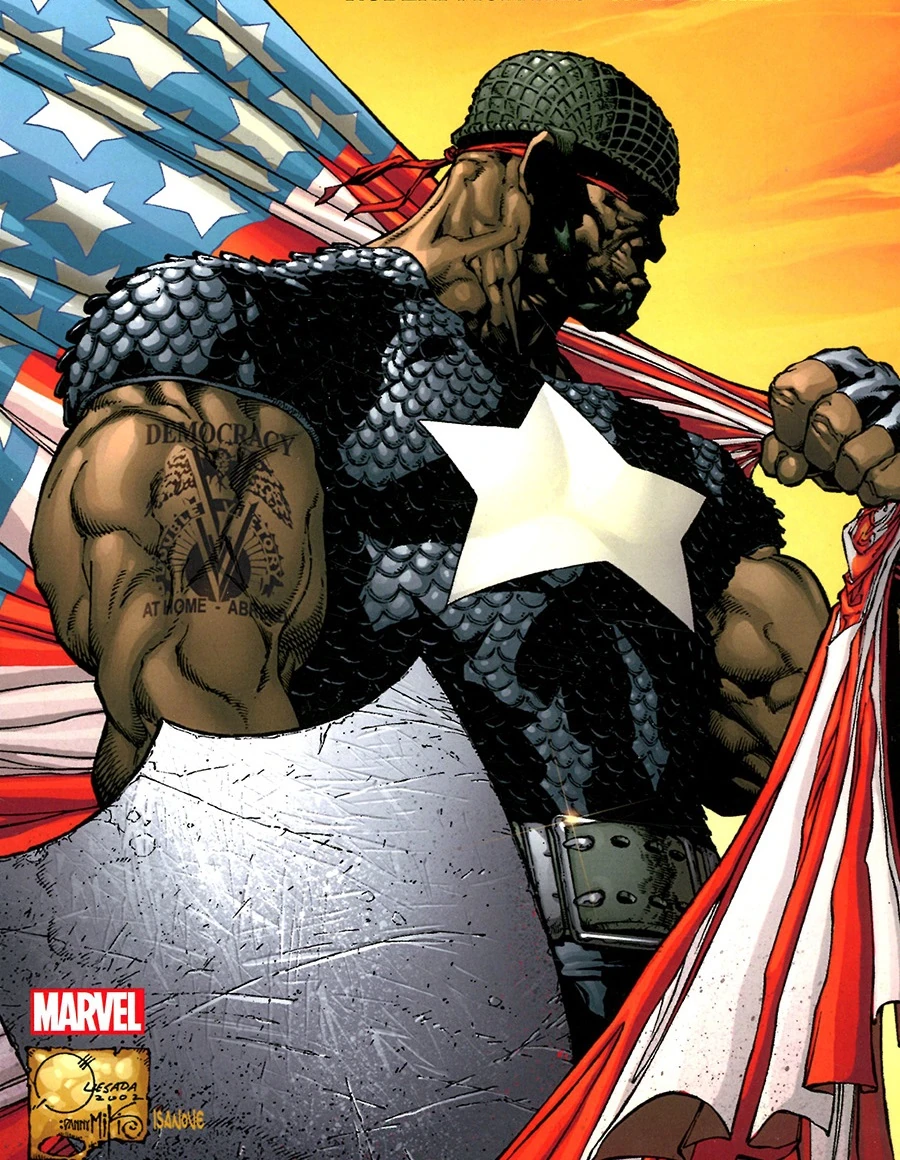
In Truth: Red, White & Black, the American military attempts to recreate the super-soldier serum. Three hundred African American soldiers are taken from Camp Cathcart and subjected to potentially lethal experiments. Only five survive the initial trials. Isaiah Bradley gradually becomes the central survivor of this fictional tragedy.
The detail is crucial: those 300 men belong to Marvel fiction. They do not correspond to a documented historical event as such. They are a narrative invention built from several real memories: Tuskegee, the segregated military, the medical exploitation of Black people, the patriotic use of African American soldiers, and their erasure.
The story then pushes Isaiah Bradley toward a suicide mission. He takes a costume and shield intended for Captain America in order to destroy a Nazi super-soldier program. He succeeds in striking the enemy, but he is captured. Upon returning to American order, he receives neither parade nor medal. He is court-martialed, sent to Leavenworth, and imprisoned for years. He is eventually pardoned by President Eisenhower in 1960.
Isaiah’s tragedy lies in that inversion. He completes a heroic mission. The state treats him like a criminal. He wears the costume of the national symbol. The nation punishes him for touching that symbol.
His body also pays the price of the serum. Its long-term effects damage him physically and neurologically. In the comics, Isaiah becomes a broken, slowed, fragile man, at times portrayed in a childlike state. That deterioration adds another layer of cruelty: the state also steals the continuity of his own self.
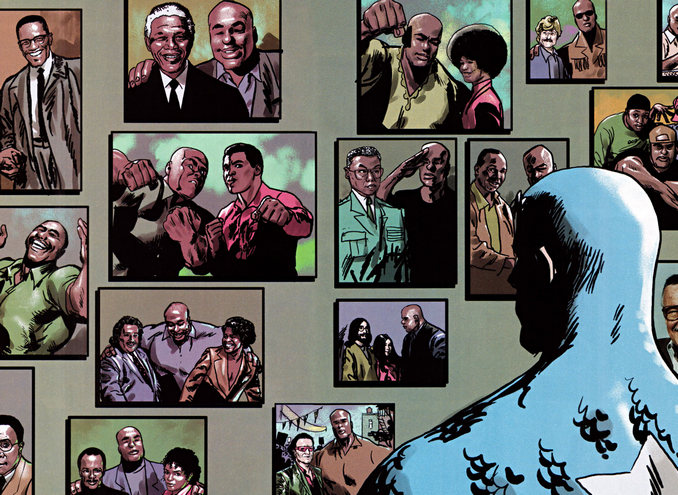
Within the Marvel universe, Isaiah Bradley becomes an underground legend. His name circulates through Black communities, activist memories, and among those who know that official America lied. Malcolm X, Richard Pryor, Muhammad Ali, Angela Davis, Alex Haley, Nelson Mandela, and Colin Powell all visit him in Marvel continuity, as though paying respect to an almost mythical figure.
This idea is one of the strongest elements of the series: Isaiah Bradley is known by his own people and unknown by the country. He belongs to a parallel Black memory transmitted outside official monuments. The general public ignores his existence. Some heroes themselves do not understand who he is. Others, especially Black heroes, react with admiration.
Marvel thus gives a superheroic form to a common historical experience: Black heroes exist, but their recognition first circulates through community, family, activist, or underground networks. Official archives forget them. Families remember. Institutions are slow to name them. Popular culture sometimes ends up repairing part of the silence.
Isaiah Bradley becomes a myth within the myth. Captain America is the national narrative. Isaiah is the counter-archive.
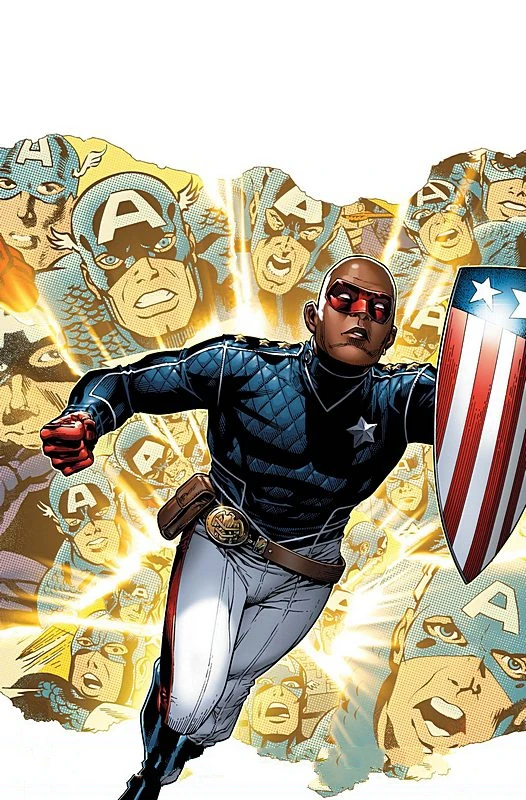
Isaiah Bradley’s story continues through his family. Faith Shabazz Bradley, his wife, occupies an essential place in that memory. She embodies the protection of the home, the wounded man, and the buried story. In a narrative where the state erases Isaiah, Faith preserves the human being.
Josiah X adds a darker dimension. He is not simply Isaiah’s “son” in the ordinary sense. The provided material explains that the government attempts to use Isaiah’s altered DNA to create a new super-soldier. After multiple experiments, Josiah is born as the genetic son of Isaiah and Faith, carried by a surrogate mother who later removes him from state control.
Elijah Bradley, meanwhile, becomes Patriot in the Young Avengers. His journey is more complex than earlier versions of the story suggested. He initially claims his abilities come from a blood transfusion from his grandfather, but that account proves false: he first uses Mutant Growth Hormone. Later, after being severely injured, a transfusion from Isaiah genuinely gives him abilities linked to the serum.
The Bradley dynasty therefore tells three forms of inheritance: biological, political, and symbolic. Isaiah carries the wound. Josiah carries the state’s genetic manipulation. Elijah carries the question of succession: what should be done with traumatic memory once it becomes a call to action?
Patriot shows that Black inheritance can become discipline, responsibility, transmission, and courage.
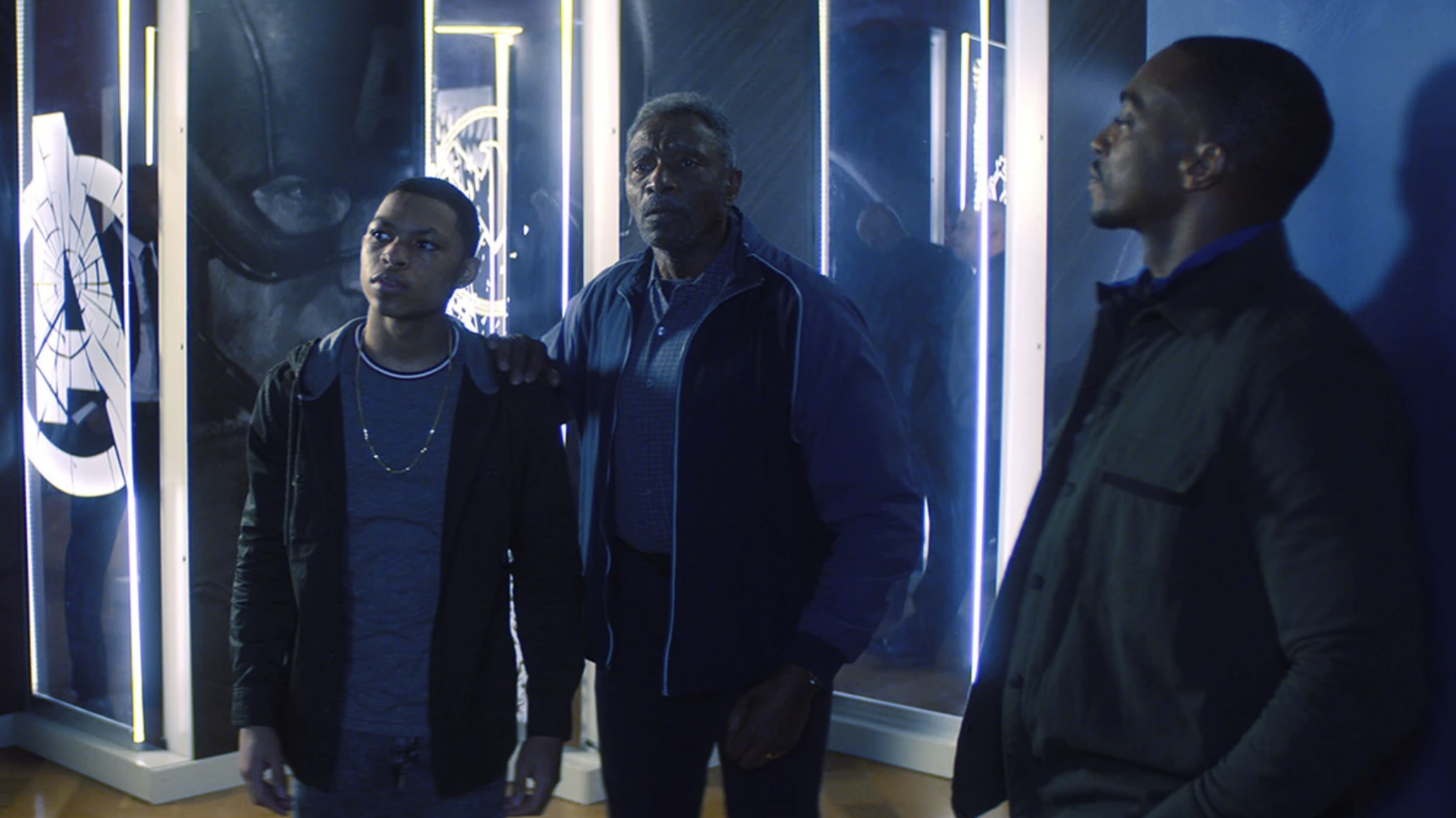
The MCU gave Isaiah Bradley new visibility with The Falcon and the Winter Soldier in 2021. Carl Lumbly portrays an older, bitter, traumatized Isaiah living in Baltimore with his grandson Eli. This version differs from the comics. In the MCU, Isaiah is a super-soldier veteran active during the Korean War. He fights the Winter Soldier, serves his country, then is imprisoned for thirty years and subjected to experiments by the government and Hydra.
This adaptation is politically effective. It places Sam Wilson before the shield’s central question: can a Black man carry the symbol of a country that destroyed Isaiah Bradley? Isaiah answers from the wound. Sam answers from responsibility. Their confrontation gives historical depth to the passing of the mantle.
Sam Wilson does not become Captain America by forgetting Isaiah. He becomes Captain America with Isaiah’s memory. The museum scene, where Isaiah’s story finally receives public recognition, functions as symbolic repair. It does not undo the prison, the experiments, or the betrayal. It inserts his name into the national narrative.
Carl Lumbly later reprises the role in Captain America: Brave New World in 2025, confirming Isaiah Bradley’s entry into Marvel’s contemporary audiovisual mythology. His presence extends an important idea: Isaiah Bradley becomes a figure accessible to the general public, tied to the transition between Steve Rogers and Sam Wilson.
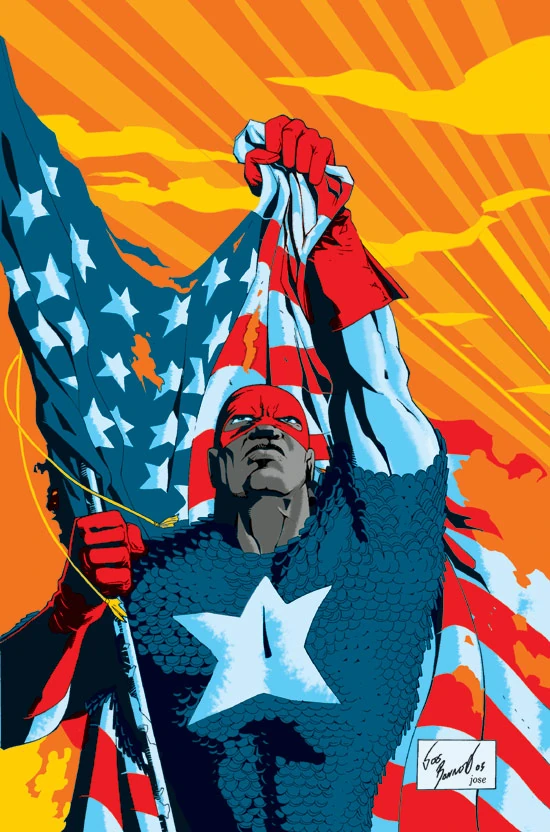
Isaiah Bradley matters because he transforms pop culture into a tool of memory. He makes it possible to talk about Tuskegee without giving a medical lecture. He makes it possible to discuss the segregated military without producing a military documentary. He makes it possible to discuss Black patriotism without reducing Black Americans to victims or symbols.
The character shows that fiction can make history felt. It does not replace the work of historians. It creates myths capable of opening questions.
Isaiah Bradley speaks of a country that asks Black people to die for it, then refuses to fully recognize them. He speaks of Black soldiers defending an incomplete democracy. He speaks of racist medical experimentation. He speaks of families forced to preserve alone the memories institutions bury. He speaks of heroes whose names circulate in kitchens, living rooms, neighborhoods, and conversations before entering museums.
He also speaks about the shield. Captain America is an icon because he makes America legible. Isaiah Bradley is indispensable because he makes that reading impossible to simplify. The star-spangled shield also becomes a surface reflecting state violence.
That is precisely where the character acquires political value. Isaiah Bradley connects popular culture to the major questions of Black history: memory, erasure, symbolic repair, medical violence, the military, patriotism, transmission, and representation. He shows that a superhero can become a critical device.
Ideal America and real America
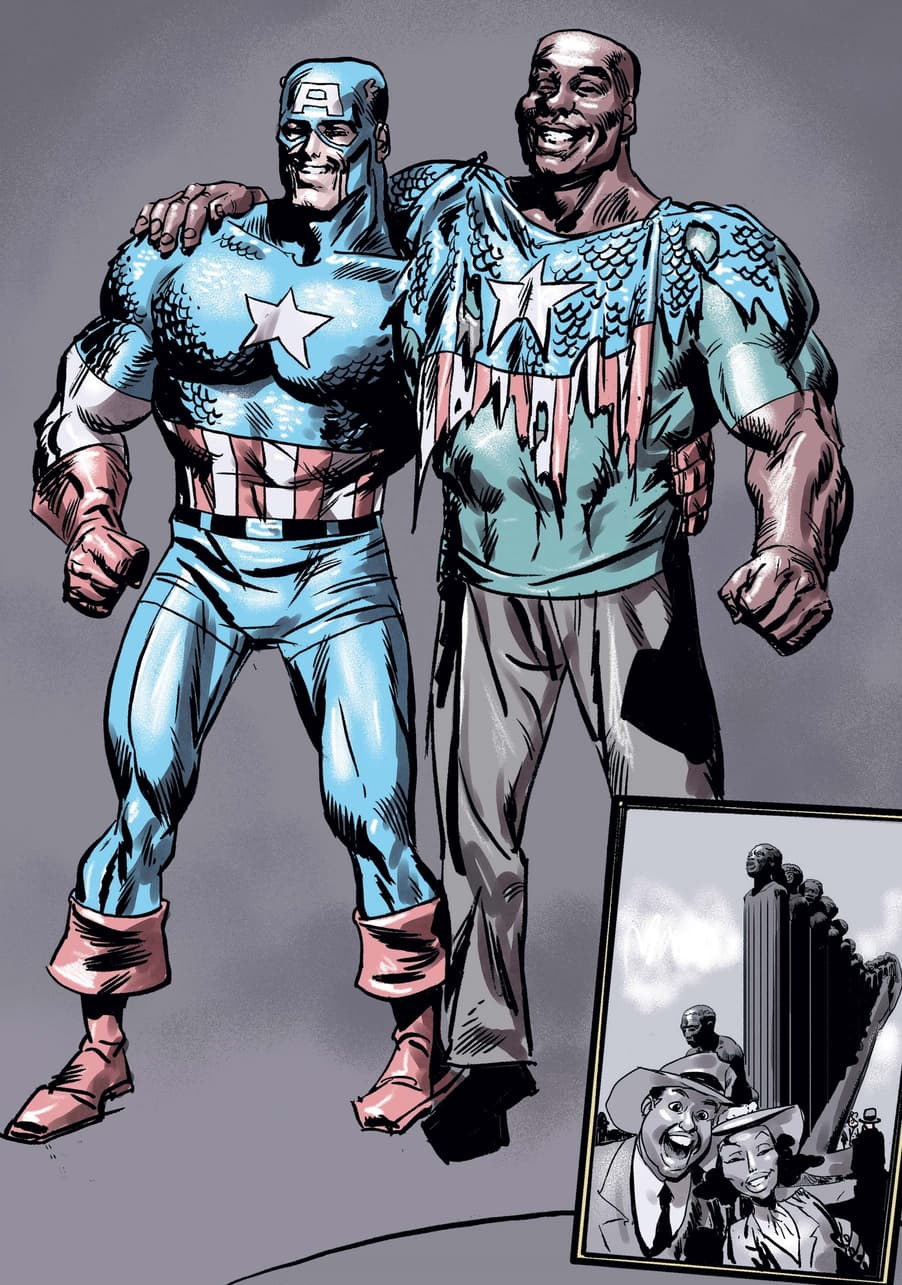
Steve Rogers embodies ideal America. Isaiah Bradley embodies real America. The first carries the proclaimed ideal. The second exposes the racial cost of that ideal. The two characters answer one another.
Isaiah Bradley gives Captain America a depth the original myth could not carry alone. He reveals that Black American patriotism has often been built within a painful contradiction: loving a country, serving it, defending it, and then being betrayed by it.
His story corrects an illusion. Recognition does not always begin with monuments. Sometimes it begins with a work of fiction daring to say: a hero was there, and the state erased him.
Isaiah Bradley is not Captain America’s Black replacement. He is the Black witness forcing Captain America to confront the history carried on his shield.
Notes and references
- “Truth: Red, White & Black“ (2003)
- “Young Avengers” (2005-2006)
- “Captain America” (Vol. 4 #28, 2004)
- “The Falcon and The Winter Soldier” (2021, Disney+)
- Ta-Nehisi Coates
- Jeffrey A. Brown, “Black Superheroes, Milestone Comics, and Their Fans“
- Adilifu Nama, “Super Black: American Pop Culture and Black Superheroes“

